
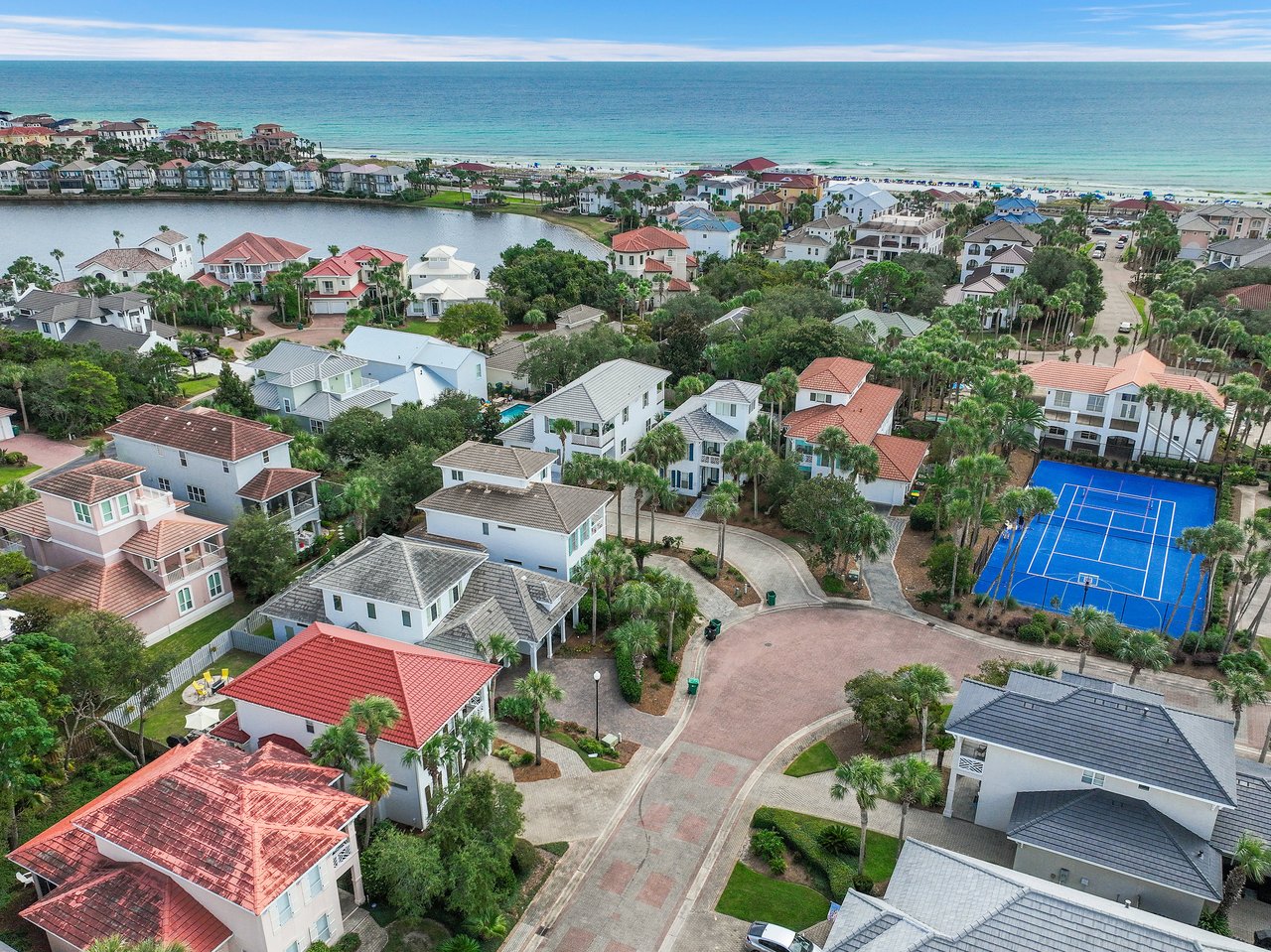
There is a particular moment when a coastal property begins to feel inevitable. Perhaps the doors open to a balcony above the Gulf, and the horizon stretches so cleanly across the glass that every practical question suddenly seems rather impolite. The sunlight is dancing on the water. The kitchen appears ready for long dinners and chilled bottles of wine. Someone begins assigning bedrooms to people who do not yet know they are coming.
And just like that, you are no longer touring a property. You are imagining Thanksgiving at the beach. Summer mornings on 30A. Long weekends in Destin. A family calendar quietly reorganized around one very convincing view. This is precisely why buying a second home on the Florida Gulf Coast requires both heart and strategy. The heart tells you where you want to be. Strategy determines whether the home will continue to feel like a beautiful decision after the closing documents are signed, the first storm passes offshore, the air-conditioning system requests an audience, and the homeowners association sends its architectural guidelines. The goal is not to remove the romance from buying a beach house. Quite the opposite. Good preparation protects it. Whether you are considering buying a beach house in 30A, comparing Destin second homes, or evaluating a Panama City Beach investment property, the most important decisions are often made before the first private showing.
Buying a Second Home in Florida Begins With One Honest Question
Before discussing bedrooms, rental projections, or the distance to the Gulf, decide what the property is meant to do. Is this primarily a private retreat for your family? Do you want rental income to offset a portion of the carrying costs? Are you purchasing a long-term investment that you may use occasionally? Could the home eventually become a primary residence? These goals can overlap, but they are not interchangeable. A home chosen for uninterrupted family use may look very different from one selected for strong vacation-rental demand. The community that feels perfect for quiet escapes may not permit short-term rentals at all. A property with impressive projected income may also require greater owner oversight, more frequent furnishing replacement, and less flexibility during popular travel periods. The clearest coastal purchases begin with a purpose, not a property.
Once that purpose is established, your advisor can help narrow the search to homes and communities that support it. This avoids the rather inconvenient discovery that your dream home and your actual plans have never been properly introduced.
The Best View Is the One You Can Insure
Insurance should be considered at the beginning of a Florida second-home search, not treated as an administrative detail at the end. Coastal insurance can vary significantly from one property to another based on location, elevation, construction, roof age, wind-mitigation features, flood exposure, prior claims, building type, and the intended use of the home. A single-family residence, a condominium, and a short-term rental may each require different conversations about coverage. Florida homeowners policies may also include a hurricane deductible that is separate from the standard deductible. Flooding is generally not included within hurricane coverage, making it important to understand wind and flood protection independently.
Before becoming emotionally committed to a property, buyers should request preliminary insurance guidance and ask:
- What policies are likely to be required?
- Is separate flood insurance advisable or required?
- What is the hurricane deductible?
- Are there wind-mitigation features that may affect coverage or premiums?
- Does the age or condition of the roof create an issue?
- Will the intended rental use change the type of policy needed?
- What does the condominium association insure, and what remains the owner’s responsibility?
This is not the glamorous portion of buying a beach house in Florida. No one has ever framed an insurance quote and hung it over the fireplace. It is, however, one of the most important numbers attached to the purchase. A sophisticated buyer does not merely ask, “Can I buy this home?” They ask, “What will it take to own this home well?”
Rental Potential Is Not the Same as Rental Permission
Many buyers arrive on the Gulf Coast with some version of the same plan: use the home when they wish, rent it when they do not, and allow the property to help carry itself. That can be a sound strategy, but only when the property, community rules, local requirements, and owner expectations are aligned. Rental regulations are not uniform across Northwest Florida. They can vary by municipality, county, neighborhood, condominium association, and even individual phase within a larger community. Panama City Beach, for example, requires short-term rentals to complete registration and provide documentation related to state licensing, local business registration, tourist development taxes, and inspections.
Restrictions may address:
- Whether short-term rentals are permitted
- Minimum rental periods
- Maximum occupancy
- Parking requirements
- Guest registration
- Local licensing and inspections
- Signage
- Noise and nuisance rules
- The number of times a home may be rented each year
- Whether owners must use an approved management company
The phrase “rental allowed” is only the beginning of the conversation. A buyer considering a Panama City Beach investment property should understand the complete registration and operating requirements. A buyer exploring homes on 30A should review both public regulations and private community covenants. Someone comparing Destin second homes should determine whether the rental structure suits the kind of ownership experience they actually want. Projected revenue can be helpful, but it should never be examined in isolation. Gross rental income is not the same as owner profit. Management fees, booking commissions, utilities, housekeeping, repairs, linens, furnishings, taxes, insurance, association fees, and owner-use patterns all influence the final performance. A beautiful spreadsheet can still wear rose-colored glasses.
Read the HOA Documents Before You Choose the Outdoor Furniture
Homeowners association and condominium documents are often treated as something to review during due diligence. Technically, that is true. Strategically, buyers should begin considering them much earlier. Association rules can affect how you use, rent, furnish, renovate, and maintain the property. They may regulate exterior colors, balcony furniture, parking, pets, storage, beach equipment, golf carts, landscaping, construction schedules, guest access, and rental operations. In a condominium purchase, buyers should also examine the association’s financial condition, reserve planning, insurance responsibilities, maintenance history, pending projects, and recent or anticipated assessments. The community entrance may be impeccable, the landscaping beautifully maintained, and the pool precisely the shade of blue one expects from a vacation. Still, the true personality of an association is often found in its financial statements and governing documents. Ask not only what the current dues are, but what those dues cover. Ask whether major capital projects are planned. Ask how reserves are funded. Ask whether assessments have been common. Ask which responsibilities belong to the association and which remain with the owner. The right association can make second-home ownership remarkably easy. The wrong fit can turn every design choice into a committee meeting.
Coastal Homes Require a Different Maintenance Rhythm
Salt air is wonderful for the soul and less enthusiastic about metal. A home near the Gulf experiences conditions that require consistent care. Exterior hardware, railings, windows, doors, mechanical systems, paint, roofing components, decking, and outdoor furnishings may weather differently than they would inland. Humidity also makes moisture management, ventilation, and climate control especially important.
A coastal maintenance plan may include regular attention to:
- Heating and cooling systems
- Roof and flashing
- Windows, doors, and seals
- Exterior paint and caulking
- Drainage and gutters
- Decking and railings
- Appliances
- Pest prevention
- Humidity and moisture levels
- Plumbing during periods of limited use
- Outdoor furniture and fabrics
The key is not to fear maintenance. It is to plan for it. Second homes are particularly vulnerable when no one is present to notice a small problem becoming a larger one. A minor leak has very little respect for your travel schedule. Smart-home technology, leak sensors, remote thermostats, security systems, and regular property checks can provide valuable oversight between visits.
For buyers who live out of state, a dependable local network is not a luxury. It is part of the property.
Storm Planning Is Part of Coastal Ownership
Storm preparation should be approached with calm, not catastrophe. Florida’s official guidance encourages residents and property owners to understand evacuation zones, know the structure of the home, develop a plan, and prepare before hurricane season.
For a second-home buyer, this means understanding practical questions such as:
- Is the property in a designated evacuation or flood zone?
- What is the home’s elevation?
- When was it built, and under which building standards?
- Does it have impact-rated windows or shutters?
- How is the roof constructed and secured?
- Who prepares the property when the owner is away?
- Who checks the home after a major weather event?
- What responsibilities belong to the owner, association, or management company?
- How will outdoor furnishings and equipment be secured?
Florida’s emergency-management resources also encourage property owners to understand the home’s ability to withstand strong wind and rain and to consult building officials regarding strengthening measures for roofs, garage doors, soffits, and other vulnerable areas. A well-prepared coastal owner does not spend the summer staring anxiously at every cloud formation. They establish the plan, assign responsibilities, maintain appropriate coverage, and then return to the considerably more pleasant business of enjoying the coast.
Property Management Should Match the Way You Plan to Own
Property management is not one universal service wearing a linen shirt. The right arrangement depends on the role the home will play. A rental-focused property may need marketing, reservations, pricing strategy, guest communication, housekeeping coordination, inspections, maintenance, tax support, and emergency response. A private second home may require home-watch services, vendor access, storm preparation, post-storm inspections, temperature monitoring, mail management, and pre-arrival preparation. Some owners want a highly involved local partner. Others prefer to remain hands-on. Neither is inherently better, but the operating model should be decided before purchase because management costs and capabilities can affect which property makes sense.
When interviewing a property manager, ask:
- How often is the home physically inspected?
- Who responds after hours?
- How are maintenance requests approved?
- Are housekeeping and linen services managed internally or outsourced?
- How are rental rates determined?
- What reporting does the owner receive?
- What happens before and after a named storm?
- Are there additional administrative, marketing, or maintenance fees?
- Can the management structure accommodate the owner’s preferred use dates?
Property management can protect both the asset and the experience. The best firms make ownership feel lighter without making the owner feel removed.
Furnish for Real Life, Not Merely for the Photograph
The coastal home should photograph beautifully. It should also survive wet towels, sandy feet, sunscreen, luggage wheels, family gatherings, and the occasional guest who believes a decorative chair is an invitation. For a private retreat, furnishings can be tailored entirely to personal taste. For a rental property, design must balance beauty, durability, comfort, and ease of replacement. That does not mean choosing generic furniture or covering every surface in nautical motifs. The Gulf already knows it is the Gulf. It does not require twelve wooden signs to confirm the matter.
Instead, prioritize:
- Performance fabrics
- Durable flooring
- Quality mattresses
- Washable textiles
- Sufficient seating
- Practical storage
- Layered lighting
- Window treatments suited to sun exposure
- Outdoor furnishings designed for coastal conditions
- A cohesive design that photographs well without feeling staged
For buyers purchasing a furnished property, the inventory should be reviewed carefully. Determine what conveys, what is excluded, what is leased, and whether existing furnishings support your intended use.
A well-designed coastal home should feel memorable without becoming precious.
Community Fit Matters More Than a Pin on the Map
Choosing where to buy along the Florida Gulf Coast is not simply a comparison of distance to the beach. Each community offers a different rhythm. Some buyers are drawn to the architectural composition and established identity of 30A communities. Others prefer the boating access, resort infrastructure, and energy associated with Destin. Panama City Beach may appeal to buyers seeking a broad range of property types, newer development, amenities, and investment opportunities. Even within the same market, the ownership experience can change from one neighborhood to the next. Consider how you expect to spend your time: Will mornings begin slowly at home, or will you want convenient access to cafés, shopping, dining, recreation, or the water? Will the property host extended family? Do you prefer a managed community with shared amenities or greater independence? Is privacy more important than proximity? Would you rather have a Gulf view, direct access, boating opportunities, or more interior space? Does the community remain aligned with your needs outside peak travel seasons?
There is no universally “best” coastal market. There is only the one that best supports the life you are purchasing the home to enjoy.
Resale Begins the Day You Buy
A second home should serve your present plans, but it should also make sense to a future buyer. Resale value is influenced by more than market appreciation. Location, view corridor, beach or water access, construction quality, floor plan, parking, rental eligibility, community reputation, insurance considerations, maintenance history, and supply all affect long-term desirability. Homes with broad appeal tend to retain options. A flexible bedroom layout may accommodate both families and rental guests. Adequate parking can become increasingly valuable in high-demand coastal areas. Durable construction and documented maintenance reassure future buyers. A respected community with clear management and well-maintained amenities can support confidence over time. Scarcity matters as well. A protected view, direct access point, unusually large homesite, strong architectural identity, or location within an established community may be difficult to reproduce. Buyers should be cautious about purchasing solely around a current trend. The wallpaper can change. The floor plan is less cooperative.
The strongest second-home decisions balance emotional appeal with enduring fundamentals.
What Should You Know Before Buying a Beach House in Florida?
Before buying a second home in Florida, understand the property’s complete ownership picture:
- Define how you will use the home. Decide whether it will be private, rented occasionally, operated as an investment property, or held for future full-time use.
- Investigate insurance early. Review likely homeowners, windstorm, hurricane, and flood coverage before making a final commitment.
- Confirm rental eligibility. Examine local regulations, association restrictions, licensing requirements, occupancy rules, and management obligations.
- Review association documents and finances. Understand dues, reserves, insurance, maintenance responsibilities, planned projects, and potential assessments.
- Create a realistic operating budget. Include insurance, taxes, association fees, utilities, property management, housekeeping, repairs, furnishings, and reserves.
- Plan for coastal maintenance. Account for humidity, salt exposure, storm preparation, exterior care, and periods when the home is unoccupied.
- Evaluate the community as carefully as the house. The right property in the wrong setting rarely becomes more convenient with time.
- Consider long-term resale. Prioritize location, access, construction quality, functional design, parking, community strength, and features that cannot easily be replicated.
Frequently Asked Questions About Buying a Second Home in Florida
Is buying a second home in Florida a good investment?
A second home in Florida may offer personal enjoyment, potential appreciation, and rental-income opportunities, but its success depends on location, acquisition cost, insurance, operating expenses, rental rules, management, and long-term demand. Buyers should evaluate both lifestyle value and financial performance rather than relying solely on projected rental revenue.
What should I know before buying a beach house in 30A?
Before buying a beach house in 30A, review the specific community’s rental restrictions, homeowners association rules, architectural standards, beach-access arrangements, insurance considerations, management options, and resale history. Conditions can vary considerably between communities and property types.
Are Destin second homes suitable for vacation rentals?
Some Destin second homes may be suitable for vacation rentals, while others are subject to community, condominium, or local restrictions. Buyers should confirm rental eligibility, minimum rental periods, occupancy limits, licensing obligations, and management costs for the specific property before purchasing.
What expenses come with a Panama City Beach investment property?
Expenses may include mortgage payments, property taxes, insurance, association fees, utilities, property management, booking commissions, housekeeping, linens, furnishings, maintenance, licensing, inspections, and applicable taxes. Panama City Beach short-term rentals must also comply with current state, county, and city registration requirements.
Do Florida homeowners policies cover flooding?
Standard homeowners insurance and hurricane coverage do not necessarily include flood damage. Buyers should evaluate the need for separate flood insurance based on the property, lender requirements, location, elevation, and professional insurance guidance.
Should I hire a property manager for my Florida second home?
A property manager or home-watch service can be valuable for out-of-state owners, rental properties, or homes left unoccupied for extended periods. The right service may coordinate inspections, maintenance, guest operations, storm preparation, and emergency response.
Fall in Love With the View. Make the Decision With Clarity.
Buying a coastal second home should feel exciting. It should invite visions of long weekends, family traditions, familiar restaurants, sandy afternoons, and the particular peace that arrives when the Gulf comes into view. But the finest coastal purchases are not made by choosing between emotion and analysis. They allow both to have a seat at the table. The view may begin the conversation. The insurance, rental rules, association structure, maintenance plan, community fit, and resale potential determine whether the home continues to live up to it. Before you begin your coastal search, schedule a strategy conversation with a Corcoran Reverie advisor. Our team can help you understand the communities, ownership considerations, and opportunities across 30A, Destin, Panama City Beach, and Northwest Florida so that when the right view appears, you are ready to recognize the right home.