
If you have ever walked 12 South and found yourself slowing down in front of a particular home, chances are the appeal was not just about square footage or finishes. In this part of Nashville, design shows up right at the sidewalk, in the porch line, the roof shape, the windows, and the way a home sits on its lot. If you are buying, selling, or simply trying to understand what gives certain homes lasting pull, these details can help you read the neighborhood with a sharper eye. Let’s dive in.
Why design matters so much in 12 South
12 South is a half-mile stretch along 12th Avenue South that Metro describes as part of a walkable corridor, and Visit Music City also highlights it as one of Nashville’s most walkable neighborhoods. That day-to-day foot traffic changes how homes are experienced. Front porches, landscaping, and façade details are not hidden from view. They are part of the neighborhood’s daily rhythm.
That visibility also helps explain why the street-facing look of a home carries real weight here. Metro planning materials define neighborhood character through elements like size, height, setbacks, spacing, parking, access, and landscaping. In much of the 12th Avenue South study area, those features are further shaped by Neighborhood Conservation or Historic Zoning rules.
In other words, the homes that stand out in 12 South usually do so because they fit the block well, not because they try to overpower it. The most sought-after properties often feel both individual and rooted in place.
Porch-first homes lead the street view
One of the clearest visual signatures in 12 South is the front porch. Nashville’s bungalow guidance describes the classic bungalow as a one- or one-and-a-half-story home with a large front porch, a low-pitched roof, wide eaves, exposed rafters, decorative braces, and square porch columns. Those details create a welcoming, human-scaled look that still feels right for the neighborhood.
This matters in a corridor where houses are highly visible from the sidewalk and street. A deep porch can soften the transition from public to private space while reinforcing the neighborhood’s pedestrian feel. It also tends to photograph beautifully, which matters when a listing first meets buyers online.
If you are evaluating a home in 12 South, pay attention to whether the porch feels integral to the architecture or tacked on later. The strongest homes usually present the porch as part of the original composition, not an afterthought.
Exterior materials that feel authentic
Bungalows in Nashville commonly use stone, weatherboard, wood shingle, or brick. Grouped rectangular windows are also typical. These materials and proportions help a home read as established and well kept, especially in a neighborhood where historic character still shapes buyer expectations.
That does not mean every desirable home has to be untouched. It means the homes with the most appeal often preserve the visual cues that make 12 South recognizable. When siding, masonry, trim, and windows feel balanced and appropriate to the house, the result is usually more convincing than trend-driven exterior updates.
Fit to the block matters as much as the house
In 12 South, great design is not only about what a house looks like on its own. It is also about how that house meets the street and relates to nearby homes. Metro’s planning guidance points to setbacks, spacing, access, and landscaping as key parts of neighborhood character, and local review documents reinforce that point.
This is one reason homes with clean front lawns and strong street presence tend to resonate here. When the façade is dominated by parking or hardscape, the home can feel out of step with the porch-oriented streetscape that defines much of the area.
Why rear garages and alley access matter
A Metro context review for 12th Avenue South noted that front yard parking was inappropriate when an improved alley was available. Staff also noted that historic homes on the block were commonly reached by rear alleys or driveways extending toward the rear of the house. That local pattern helps explain a preference you see again and again in 12 South.
Rear-loaded garages and alley access protect the front elevation. They keep the porch, entry, and landscape as the focus rather than letting parked cars dominate the view. For buyers, that often translates into a home that feels more polished and more connected to the block.
For sellers, this is an important reminder that curb appeal in 12 South is not just about fresh paint or seasonal planters. It is about preserving a street-facing composition that matches how the neighborhood was built to be experienced.
Original interior details still carry weight
Inside the home, character matters too. Nashville’s old-house guidance identifies several bungalow interior features that still catch buyers’ attention today, including front doors that open directly into the living room, exposed-beam ceilings, masonry or cobblestone fireplaces, natural-stained woodwork, and built-in sideboards or bookcases.
These details give a home a sense of texture and permanence. They also separate a 12 South home from a generic renovation that could be anywhere. In many cases, buyers respond to the feeling of craftsmanship as much as they respond to a finish palette.
Fireplaces as a focal point
The same guidance notes that fireplaces in these homes were often simple masonry compositions with a wooden shelf, and that the fireplace was typically a dominant visual feature. In practical terms, that means a well-preserved fireplace can anchor the entire main living space.
When you walk into a 12 South bungalow, notice whether the fireplace still feels like the heart of the room. Even in a renovated home, preserving that focal point can help the house retain its identity.
What tasteful updates usually keep
Many of 12 South’s most compelling homes are not frozen in time. They have been updated for modern living, but the best renovations usually keep the character that made the home appealing in the first place.
A featured 12 South Craftsman in Nashville Lifestyles opened up the downstairs, raised door heights, preserved original red oak floors, added a new kitchen with custom marble countertops, inserted a pantry, and added a rear addition while staying visually aligned with the home’s original style. That is a useful example of what buyers tend to respond to here: better function without losing the house’s architectural voice.
When an open kitchen feels right
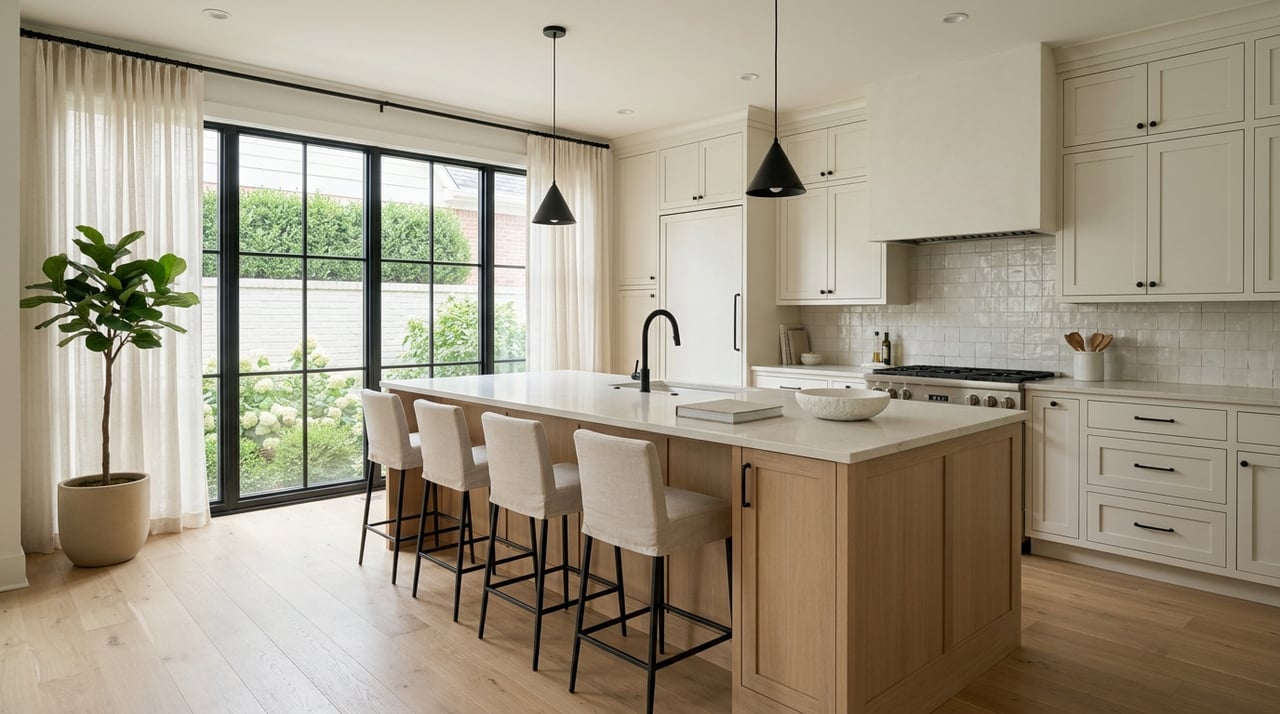
Open living matters to many buyers, but in 12 South, the key is whether the layout still feels connected to the home’s scale and story. Another 12 South cottage feature in Nashville Lifestyles showed a more contemporary social layout where the living room opens to the kitchen, a large island anchors daily life, and entertaining happens more casually.
An open kitchen tends to feel authentic when it improves flow while preserving meaningful elements around it. Original floors, built-ins, ceiling details, fireplaces, and trim can all help the updated space feel grounded. Without those anchors, an interior can start to feel less like 12 South and more like a generic remodel.
Additions work best when they are compatible
In a neighborhood with historic patterns, additions and infill need to do more than add square footage. Metro’s preservation guidance says additions should be contemporary and distinguishable from the original structure while still respecting the house’s character. Historic review documents also emphasize height, scale, orientation, roof form, opening proportions, and the rhythm of spacing.
That guidance points to a simple truth. The most successful new work in 12 South is usually compatible, not imitative. It respects the block without pretending to be older than it is.
What compatibility looks like in practice
Compatible design often starts with massing. Rooflines may echo nearby homes, openings may feel balanced instead of oversized, and the home’s orientation usually supports the street rather than turning away from it.
For buyers, that can make a newer or expanded home feel more settled and more enduring. For sellers, it helps explain why design choices that honor proportion and placement often hold stronger appeal than flashier updates.
Outdoor living is part of the story
In 12 South, outdoor space is not separate from the house. It is part of how the home lives and how the neighborhood feels. A recent 12 South cottage feature framed the front yard, porch, and backyard as extensions of the home, with layered planting, a welcoming entry, and a backyard designed for gathering.
That approach aligns with the area’s pedestrian identity. NDOT’s 12th Avenue South project includes protected bike lanes, bioswales, safer crossings, and bus stop improvements, all of which support a more outdoor-friendly corridor. The result is a neighborhood where porches, entries, gardens, and backyard entertaining spaces carry real lifestyle value.
The details buyers tend to notice outside
If you are comparing homes in 12 South, these exterior features often stand out:
- Front porches that feel generous and well integrated
- Landscaping that frames the entry without overpowering it
- Rear-loaded parking or alley access that keeps the front elevation clean
- Windows and materials that feel balanced with the home’s scale
- Backyard spaces that extend daily living and entertaining
These details do not need to be extravagant. In many cases, restraint is what makes a home feel elevated.
How to read a 12 South home well
Whether you are buying or preparing to sell, it helps to look past trend language and focus on what truly defines value in this neighborhood. In 12 South, sought-after homes usually combine three things: authentic architectural cues, updates that improve everyday living, and a street presence that fits the block.
That combination is what gives a home staying power. It also helps explain why some properties feel instantly compelling while others, even with strong finishes, do not land the same way.
If you are considering a move in 12 South, a design-focused lens can help you make better decisions from the start. And if you are preparing to list, knowing which details buyers notice most can shape smarter presentation, pricing, and marketing.
At Corcoran Reverie, we believe homes like these deserve thoughtful storytelling and local guidance that understands both design and market context.
FAQs
What exterior details define many sought-after 12 South homes?
- Large front porches, low-pitched roofs, wide eaves, square porch columns, grouped rectangular windows, and materials like brick, stone, weatherboard, or wood shingle are all recurring details noted in Nashville’s bungalow guidance.
Why do porches matter so much in 12 South?
- Because 12 South is a walkable, pedestrian-oriented corridor, porches shape how homes meet the street and how they are experienced both in person and in listing photography.
Why are rear garages preferred in many 12 South homes?
- Local review documents for the area note that front yard parking can be inappropriate when alley access is available, and rear access helps preserve the porch-first, street-facing character of the block.
Which interior features still add character in 12 South homes?
- Buyers often notice original red oak or other wood floors, exposed-beam ceilings, natural-stained woodwork, built-ins, and masonry fireplaces that act as visual anchors in the main living space.
When does an open kitchen feel authentic in a 12 South home?
- It usually feels most natural when the renovation improves flow for modern living while preserving key architectural elements that keep the home connected to its original scale and style.
What makes a new addition fit a 12 South home better?
- The strongest additions are typically contemporary but compatible, respecting the home’s height, scale, orientation, roof form, and opening proportions rather than trying to copy the original exactly.