
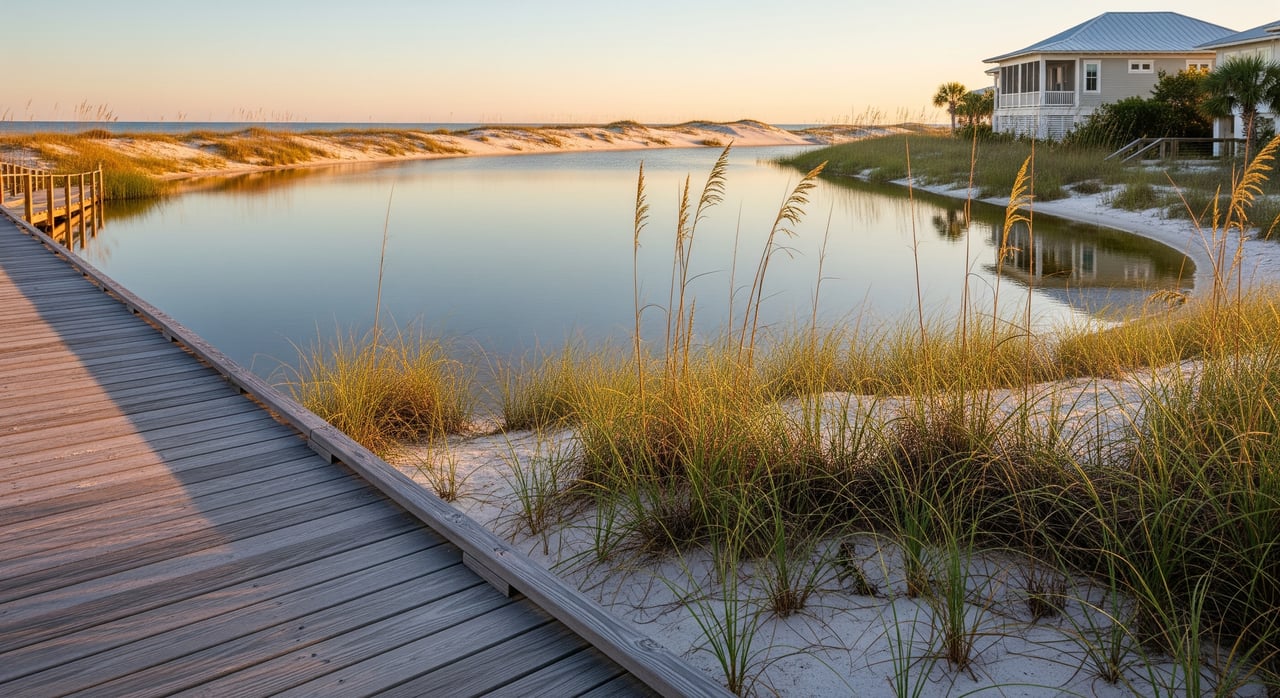
If the mirror-calm waters tucked behind the dunes along 30A have caught your eye, you are looking at something rare. Coastal dune lakes shape the character of WaterColor and the surrounding Walton County coastline. If you are buying or selling near one, understanding how these lakes work can help you evaluate value, risk, and everyday stewardship. In this guide, you will learn the essentials, from lake behavior and recreation to permitting, insurance, and practical checklists for buyers and sellers. Let’s dive in.
Coastal dune lakes, explained
Rare and dynamic by nature
Coastal dune lakes are shallow lakes or ponds that sit just behind beach dunes and intermittently interact with the Gulf of Mexico. They are found in only a few regions worldwide, which adds to their appeal and conservation importance on 30A. These waters can shift from fresh to brackish and back again as conditions change.
How these lakes form and behave
They form where rainwater, small drainages, and groundwater collect behind a sand barrier. Water levels rise and fall with rainfall, groundwater exchange, and evaporation. During storms or high-water events, temporary connections to the Gulf can open. That influx of saltwater and sand can quickly change the lake’s salinity, clarity, and shoreline shape.
Ecology and benefits
These lakes support a mix of plants, fishes, and birds adapted to changing salinity. They often have high biological productivity and offer habitat diversity. For nearby communities, they provide scenic value, recreation like paddling and birdwatching, and can absorb some storm energy in certain conditions.
WaterColor and 30A context
A defining landscape for 30A
Along 30A in Walton County, coastal dune lakes are signature features of the landscape. Neighborhoods and parks often orient trails and viewpoints around them, which enhances a home’s lifestyle appeal. In WaterColor, proximity to a dune lake often becomes part of the story you tell about the property.
Recreation and access
Common activities include paddling, catch-and-release fishing, and shoreline walks. Swimming does occur in many lakes, but water quality and safety can vary after storms or seasonal events. Access differs by location. Some shorelines sit within parks, while others are private or limited by easements, so it is important to confirm local access rules.
Development pressures to watch
Paved surfaces, roads, and building density can increase stormwater runoff and nutrients that flow into a lake. Over time, that can affect water quality and the shape of the shoreline. Shoreline alterations like docks, grading, or seawalls are often regulated and may require permits at county and state levels.
Why they matter for property value
Amenity and lifestyle appeal
Lakeside views, wildlife, and walkable access to trails are strong selling points in the 30A market. Properties with lake frontage or views commonly command a premium because they offer a distinctive coastal experience. Nearby public access can boost neighborhood desirability, though it may increase parking or seasonal traffic.
Risks to weigh
These lakes are dynamic. Heavy rain and tropical systems can cause rapid water-level changes, overtopping, or temporary breaches to the Gulf. Shorelines can shift with dune movement and storm events. Water quality issues like algal blooms or fish kills can temporarily affect recreation and a community’s appeal. Older homes on septic near sensitive watersheds may also face scrutiny or future upgrades.
Buying near a dune lake: due diligence
Use this checklist to move from curiosity to clarity:
- Flood risk and elevation:
- Review current FEMA Flood Insurance Rate Maps and local floodplain determinations, including Base Flood Elevation for the property.
- Request any available elevation certificates from the seller.
- Permits, easements, and shoreline restrictions:
- Ask about recorded public access easements, conservation easements, and any previously permitted shoreline work such as docks or seawalls.
- Check with Walton County planning and environmental permitting for active permits or violations.
- Water and septic infrastructure:
- Confirm if the property is on public sewer or septic, and review maintenance or repair history.
- Ask about sewer expansion or drainage improvements planned in the lake’s watershed.
- Water quality and lake history:
- Request recent water-quality advisories or monitoring reports for the specific lake.
- Ask for records of past breaches, channel openings, or notable shoreline changes.
- Insurance and past claims:
- Ask for a history of flood or storm damage claims.
- Speak with insurers early to understand flood and wind policy requirements for the parcel.
- HOA rules and covenants:
- Review rules that cover dock use, shoreline plantings, buffer maintenance, guest access, and any limits on shoreline structures.
- Neighbors and access details:
- Confirm whether shoreline frontage is private, shared, or public, and who is responsible for maintenance.
Selling near a dune lake: preparation
- Gather and disclose:
- Known flooding or prior storm damage, shoreline alterations, septic repairs, and any government notices or permits.
- Provide documentation:
- Survey and elevation certificates, records of shoreline or erosion-control work, and HOA rules affecting lake use.
- Clarify the lifestyle value:
- If you market lake access, document legal access rights and any seasonal limits or water-quality advisories that could affect use.
Permits, rules, and who to contact
You will often see multiple layers of oversight near these waters. The specifics vary by parcel, so verify current requirements:
- Walton County government for planning, zoning, environmental permitting, local setbacks, and GIS/flood maps.
- Florida Department of Environmental Protection for coastal construction, dunes, and wetlands guidance.
- U.S. Army Corps of Engineers for projects that may affect navigable waters or require federal permits.
- FEMA for floodplain mapping and local floodplain administration.
- Florida Fish and Wildlife Conservation Commission for guidance on fish and wildlife considerations.
- University of Florida IFAS Extension and Florida LAKEWATCH for lake monitoring and outreach resources.
- Local watershed and conservation groups for water-quality updates and restoration efforts.
Permitting often applies to docks, dredging, filling, shoreline stabilization, and dune alteration. Rules can change, so confirm current standards before planning any work.
Everyday stewardship for owners
You can protect lake health and your investment with a few consistent habits:
- Maintain a native vegetated buffer along the shoreline to filter runoff and stabilize soil.
- Use stormwater best practices such as rain gardens or permeable surfaces where possible.
- Limit fertilizer and manage pet waste to reduce nutrient loading.
- Keep septic systems well maintained or explore sewer connections where available.
- Respect dune integrity by staying on designated paths and avoiding unauthorized grading.
Insurance and financing basics
Properties near coastal dune lakes may sit in flood zones. Lenders might require flood insurance, and it is often advisable even when not required. Elevation data, past claims, and local floodplain rules can influence your mortgage and premiums. If you are using VA or FHA financing, confirm flood-zone compliance early to avoid surprises.
Living by the lakes: a balanced view
A home near a coastal dune lake offers a rare combination of beauty and access to nature. These waters also deserve care and informed decision-making. When you understand how they behave and how rules apply to your parcel, you can enjoy the lifestyle while protecting long-term value.
Ready to evaluate a specific WaterColor property or prepare your home for market? Reach out to the local team at Corcoran Reverie for tailored guidance, market insights, and a clear plan for your next move.
FAQs
What is a coastal dune lake and why is it rare?
- A shallow lake behind coastal dunes that occasionally connects to the Gulf; this type of lake occurs in only a few places worldwide, which makes 30A’s examples distinctive.
Are coastal dune lakes safe for swimming year-round?
- Many are used for swimming, but conditions vary with storms and seasons, so check recent advisories and use caution after heavy rainfall.
Can I build a dock or do shoreline work on a dune lake?
- Dock construction, dredging, filling, and stabilization often require permits from county and state agencies; approval depends on site specifics and current rules.
Will the shoreline next to my property move over time?
- Yes, dune migration, storm overwash, and changing water levels can alter shoreline position, depth, and access.
How do I evaluate flood risk near a dune lake in WaterColor?
- Review FEMA flood maps, confirm Base Flood Elevation, obtain an elevation certificate, and speak with local officials and insurers about site-specific risk.
Who should I contact for up-to-date local rules and reports?
- Start with Walton County planning and environmental offices, Florida DEP, UF/IFAS or Florida LAKEWATCH, and local watershed groups for monitoring and guidance.