
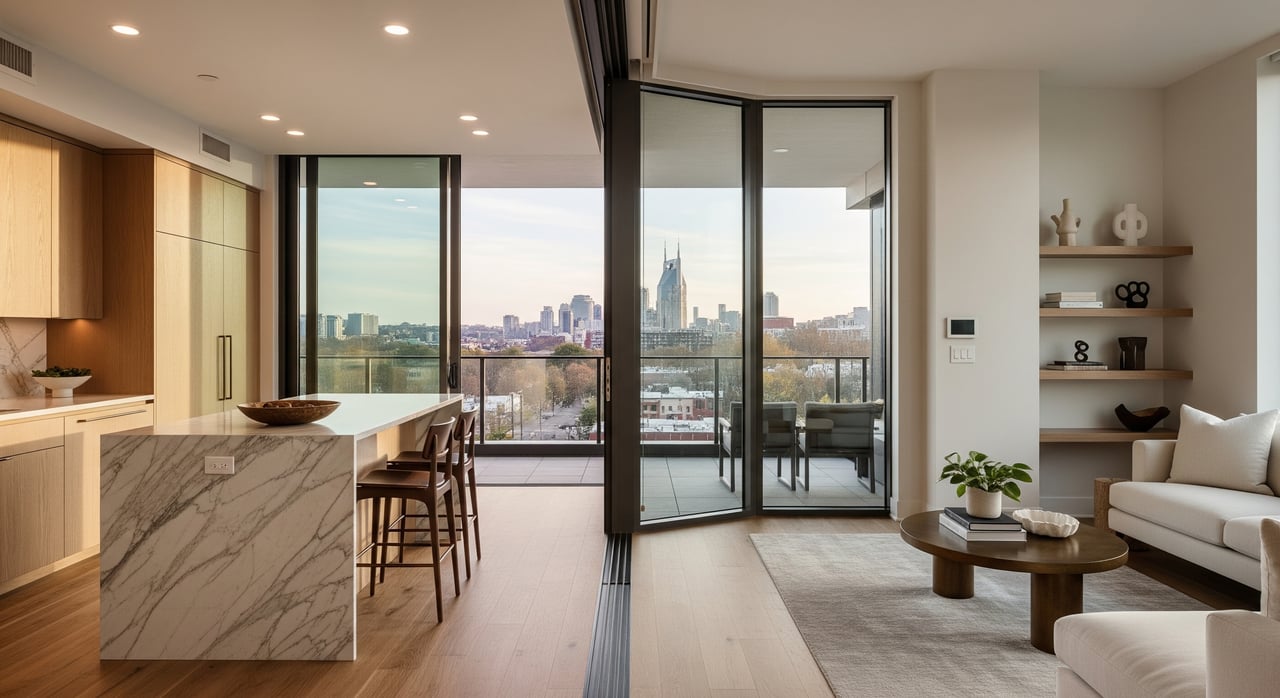
Shopping for a condo in The Gulch can feel exciting and overwhelming at the same time. You want skyline views, a smart floorplan, and effortless access to Nashville’s best dining, all while protecting your investment. With so many buildings and unit styles to compare, it helps to use a clear, proven process. In this guide, you will learn how to evaluate views, layouts, amenities, parking, HOA rules, financing, and resale potential in The Gulch with confidence. Let’s dive in.
Understand The Gulch context
The Gulch sits in the heart of Nashville, within Davidson County, and is known for walkability, restaurants, retail, and proximity to downtown employers and entertainment. That mix supports steady demand from both owners and investors. You will find luxury high-rises, boutique mid-rises, loft conversions above retail, and many mixed-use buildings.
Market conditions shift quickly. For current pricing and days on market, review local MLS data and brokerage market briefs. If you are sensitive to construction noise or crane views, check Metro Nashville planning and permit filings to see what is coming to nearby parcels.
Define your must-haves first
Before you tour, get clear on what matters most. Separate non-negotiables from nice-to-haves so you can make fast, confident decisions.
- Must-haves: deeded garage parking, minimum bedroom count, balcony, ability to rent long term, specific HOA fee ceiling.
- Nice-to-haves: certain view corridor, on-site concierge, pool or rooftop, in-building fitness, bike storage.
- Deal-breakers: rental bans if you plan to lease, high delinquency in dues, pending litigation, or thin reserves in the HOA budget.
Create a short checklist you can use for every unit. It will keep you focused as you compare options.
Compare views with due diligence
Views drive both lifestyle and resale. Start with orientation and floor level, then confirm what could change.
- Study floorplates and unit line drawings to confirm window placement and exposure.
- Visit at different times of day to gauge light, glare, and noise from restaurants, loading docks, or entertainment venues.
- Use aerial and street imagery to spot nearby lots or mid-rises that could be new tower sites. Verify by reviewing Metro Planning permit applications and site plans.
A view that is protected by distance, street width, or a built environment that is unlikely to change can support long-term value.
Evaluate floorplans and livability
Square footage alone does not tell the story. Focus on how the space lives.
- Look for efficient circulation, logical bedroom placement, and ample storage or dedicated closets.
- Confirm usable interior area vs listed square footage. Tax records and MLS can differ from actual livable space.
- For flexible living, note whether an office alcove or den can function as a guest space without sacrificing privacy.
Layouts that balance openness with defined zones tend to photograph well, feel larger, and appeal to future buyers and renters.
Weigh amenities and building services
Amenities shape your daily routine and your monthly costs. In The Gulch, common offerings include concierge or attended lobbies, fitness centers, pools or rooftops, secure package rooms, bike storage, shared workspaces, and ground-floor retail.
- Ask whether particular spaces are common elements or deeded private areas, and whether reservations or added user fees apply.
- Study the HOA budget and reserve study to see if the building can maintain its amenity package without repeated special assessments.
- Observe amenity usage during evenings or weekends to understand capacity and crowding.
Amenity-rich buildings can command premiums, but they also carry higher operating costs. Healthy reserves and realistic budgets are essential.
Understand parking and transportation
Parking in The Gulch is a major convenience factor, and it affects resale.
- Confirm whether your space is deeded on title, assigned by license, tandem, or leased valet. Deeded spaces typically carry more value.
- Ask about EV charging availability, rules for owner-installed chargers, and any waitlists.
- Review guest parking and loading policies for rideshare and deliveries, including enforcement and fines.
- Consider your walk-to-work or walk-to-entertainment patterns, plus proximity to transit routes and bike corridors. Walkability supports both lifestyle and rental demand.
If street parking is limited near your building, deeded garage parking becomes even more important.
Review HOA rules and financial health
The association’s governance affects how you live and how you exit. Read the governing documents with care.
- CC&Rs and bylaws: confirm rental limits, minimum lease terms, pet rules, renovation rules, and assessment procedures.
- Budget and reserves: review monthly dues, what utilities or services they cover, and the reserve study’s funding level compared to estimated replacement needs.
- Delinquency and assessments: ask for delinquency rates, recent or planned special assessments, and a list of major capital projects.
- Insurance: confirm the master policy type and deductible. You will need an HO-6 policy for interior finishes, personal property, and loss assessment coverage.
Request minutes from recent HOA meetings to surface governance issues, upcoming projects, or any pending litigation.
Check financing and underwriting early
Condo underwriting varies by lender and by project. Clarify requirements before you fall in love with a unit.
- Ask your lender about project approval standards, including minimum owner-occupancy, investor concentration, and single-entity ownership limits.
- If you plan to use FHA or VA financing, verify whether the project appears on the relevant approval lists or if a single-unit approval is possible.
- Remember that HOA dues count in many debt-to-income calculations. Higher dues can impact your loan amount.
A quick conversation with a condo-savvy lender can save time and protect your negotiating position.
Gauge resale potential and marketability
Strong resale potential comes from lifestyle plus fundamentals.
- Location: proximity to employment centers, nightlife, and daily conveniences supports demand.
- Unit attributes: deeded parking, a desirable view corridor, outdoor space, and a functional layout all help pricing power.
Stay aware of the local supply pipeline. New condo developments or conversions nearby can influence absorption, pricing, and time on market. Metro Planning applications and construction notices are your early indicators.
Run a smart on-site tour
Bring a structure to your tours so you capture the details that matter once you compare later.
- Unit checks: confirm light, views, and noise; test HVAC and water pressure; review windows and finishes; verify storage and any assigned storage lockers.
- Parking: match your deeded stall number to a physical space and confirm access and location within the garage.
- Building walkthrough: observe lobby and hallway condition, elevator speeds, package handling, trash and recycling logistics, and any odor or noise impacts.
- Amenity visit: tour fitness, pool, rooftop, and cowork areas during peak hours to gauge crowding and maintenance.
Take notes and photos for each unit. Small differences add up when you make your final choice.
Use this document checklist
Request and review these items for every building on your short list. Comparing side by side will make the best option stand out.
- CC&Rs, bylaws, and any rental-use rules
- Current operating budget and most recent financial statements
- Reserve study and current reserve balance
- Recent HOA meeting minutes for the last 6 to 12 months
- Insurance certificate and master policy deductible summary
- Delinquency report or the percentage of owners behind on dues
- List of deeded or assigned parking spaces with deed references
- Written pet policies and renovation rules
- Any pending litigation or claims, plus recent special assessments
If you are an investor, add a lease application packet and current rental cap status to your list.
Ask focused questions
When you speak with the property manager or board representative, get specific.
- What is the current reserve balance and when was the last reserve study completed?
- Are there planned capital projects or special assessments in the next 12 to 36 months?
- What percentage of units are owner occupied vs investor owned?
- What is the current delinquency rate on dues?
- Are short-term rentals allowed, and if so, what are the registration or permit requirements?
- Are parking spaces deeded, assigned, or leased, and are there waitlists for additional spaces or EV chargers?
- Is there any ongoing or threatened litigation involving the association?
Direct answers to these questions are critical for financing and long-term cost planning.
Protect your purchase with risk checks
A few simple verifications can prevent surprises.
- Flood and environmental: check FEMA flood maps and local overlays by address.
- Building history: confirm certificate of occupancy and permit history for major alterations.
- Title and easements: verify deed language for parking stalls, balconies, and any exclusive-use areas to ensure rights are clear.
Engage a condo-focused inspector to evaluate the unit and common elements that affect your ownership experience.
Build a clean comparison matrix
After you tour, put every candidate on one page so the right choice is obvious.
- Core facts: address, unit ID, floor, orientation and view, square footage, bed and bath count.
- Financials: list price, price per square foot, HOA dues and inclusions, reserve balance indicators, special assessments.
- Practical items: parking type and stall number, storage, amenities, pet and rental policies, proximity to transit, and walkability.
- Market signals: days on market and any price adjustments.
When you compare apples to apples, trade-offs become clear and you can move decisively when the right unit appears.
Work with a trusted local team
The Gulch offers an urban lifestyle with real depth. Getting the right condo means pairing that lifestyle with sound due diligence. A local team can help you source documents, coordinate tours at the right times, review HOA health, and confirm project-level financing early so you can negotiate with confidence.
If you are ready to narrow your short list or want a second set of eyes on an HOA package, reach out to Corcoran Reverie. You will get attentive, design-conscious guidance and the resources of a national network, all focused on helping you choose well in The Gulch.
FAQs
What HOA documents should Gulch condo buyers request?
- Ask for CC&Rs and bylaws, recent HOA meeting minutes, current budget and financials, the reserve study, insurance certificate, delinquency data, and any litigation disclosures.
How do Gulch condo rental rules affect investors?
- Rental caps, minimum lease terms, and short-term rental restrictions in the CC&Rs shape your income options and financing eligibility, so verify them before you write an offer.
How can I verify FHA or VA eligibility for a Gulch building?
- Confirm with your lender and check the relevant HUD/FHA and VA condo approval lists, or ask whether a single-unit approval path is available for your loan program.
What counts as deeded parking in The Gulch?
- A deeded space appears in recorded title documents or plats with a specific stall reference, which typically provides stronger ownership rights and better resale value than assigned licenses.
How can future development impact my Gulch condo views?
- Proposed towers on nearby parcels can change view corridors, so review Metro Planning permit applications and site plans, then confirm on-site with orientation and line-of-sight checks.
What flood risk checks should I run for a Gulch address?
- Use FEMA flood maps and local overlays to confirm zone status, then discuss insurance needs and building drainage history with management and your inspector.